

Clean Title vs. Salvage or Rebuilt: What’s the Difference, and Which One Should You Buy?
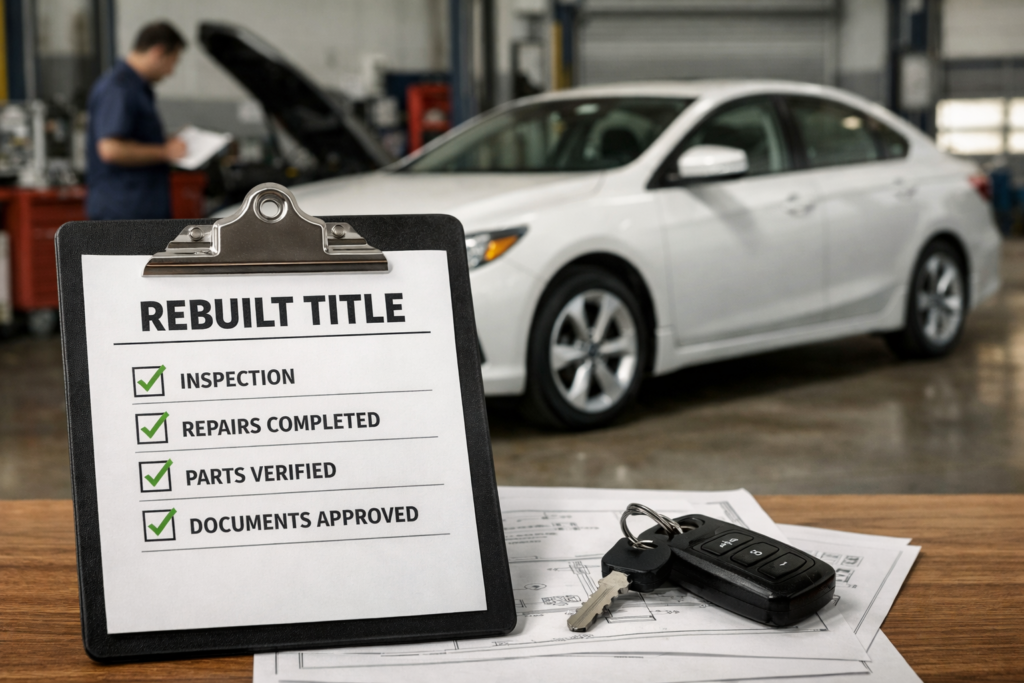
A clean title is usually the safest and easiest choice to finance and insure, while salvage and rebuilt titles can cost less upfront but often come with more risk and extra steps.
If you’re shopping for a used car in Lufkin, you’ll see listings that say “clean title,” “salvage,” or “rebuilt.” Those labels matter because they affect what the car is worth, how easy it is to get a loan, what your insurance company will cover, and how confident you can feel about the vehicle’s past.
This guide breaks down what each title status means, how it impacts financing and insurance, and what to watch for so you can buy with clarity.
Quick definitions you can use right away
Clean title means the vehicle doesn’t have a “brand” on the title for major damage (like being declared a total loss).
Salvage title typically means an insurance company declared the vehicle a total loss and it’s not considered roadworthy as-is.
Rebuilt title means the car was once salvage, then repaired and passed a state-required rebuilt inspection process to return to legal road use.
What does a clean title mean?
A clean title means the vehicle’s title isn’t branded as salvage, rebuilt, junk, flood, or similar categories. It does not mean the car has never been in an accident, and it does not automatically mean “perfect condition.” It simply means the state’s title record doesn’t show a major branding event.
In real-world terms, a clean title is usually simpler for loans, simpler for insurance, and easier to resell later.
What does a salvage title mean?
A salvage title generally means the vehicle was declared a total loss by an insurance company due to damage, theft recovery, or other major event. In many states, a salvage vehicle isn’t meant to be driven on public roads until it’s repaired and re-titled according to state rules.
In Texas, the state has specific processes and forms for salvage titling and for moving from salvage to rebuilt status.
What does a rebuilt title mean?
A rebuilt title in Texas (often shown as “Rebuilt Salvage”) means the vehicle previously had a salvage title after being considered totaled and inoperable, but it was repaired and retitled so it can be registered and driven again.
To get that rebuilt salvage title, the owner files a Texas title/registration application through the county tax assessor-collector and submits required documentation such as the Rebuilt Vehicle Statement (VTR-61) and supporting ownership/parts records.
Because it’s still a branded title, it usually sells for less than a comparable clean-title vehicle.
Clean vs. salvage vs. rebuilt at a glance
| Title status | What it usually means | Can it be legally driven? | Financing impact | Insurance impact | Resale/value impact |
| Clean title | No major “brand” on the title | Yes | Easiest approvals and best terms | Easiest to get full coverage | Highest resale value |
| Salvage title | Total loss / major event; not roadworthy as-is | Typically no (until rebuilt) | Often not financeable | Often not insurable for road use | Very low value, limited buyers |
| Rebuilt title | Previously salvage, repaired and inspected | Yes (after rebuilt process) | Possible, but fewer lenders and tighter terms | Coverage may be limited; full coverage can be harder | Lower value; harder resale |
(Exact rules vary by state and insurer/lender, so always verify before you buy.)
How title status affects financing
Rebuilt-title vehicles can be financeable, but they’re harder to finance than clean-title cars. Many lenders see branded titles as higher risk because the vehicle’s value can be harder to verify, and the resale market is smaller.
Here’s what commonly changes when a vehicle is rebuilt:
- Higher down payment requirements
- Higher interest rates
- Shorter loan terms
- More documentation (inspection paperwork, receipts, or appraisal)
If you’re planning to finance, ask the most important question early: “Will you lend on a rebuilt title for this VIN?” That one sentence can save you hours.
Can you finance a salvage title car?
In most cases, a salvage-title car is not a good candidate for traditional financing because it typically isn’t road-legal until it’s rebuilt and re-titled. Most banks and credit unions don’t want collateral that can’t be registered or insured the normal way.
If a lender does consider it, it’s usually a specialized situation, not a typical auto loan.
How title status affects insurance
A salvage title can make insurance complicated because the vehicle may not be eligible for normal road coverage until it is rebuilt and is legally registered. With rebuilt titles, some insurers will write coverage, but optional coverages like comprehensive and collision may be harder to get, depending on the company and the vehicle.
In plain English: clean-title cars are usually easy to insure, rebuilt-title cars can be insurable with extra steps, and salvage-title cars are often a “not yet” until the title status changes.
What lenders require matters, too
If you finance a car, the lender typically requires full coverage (not just liability). That’s where rebuilt-title shopping gets tricky: you need a vehicle your lender will finance and an insurer willing to write the coverage your lender requires.
What to watch for with salvage or rebuilt vehicles
A rebuilt title does not automatically mean the car is “bad,” but it does mean you need to verify more. The goal is to understand what happened, how it was repaired, and whether the discount is worth the extra risk.
The biggest risks buyers miss
- Hidden structural damage
Frame or unibody repairs can affect alignment, tire wear, and crash safety. - Flood and water exposure
In Texas, floodwater damage is a real concern, and it can lead to corrosion and electrical issues months later. - Airbag and safety-system shortcuts
A car can look great and still have missing or improperly repaired safety systems. - Title washing and paperwork problems
Title fraud happens, and it’s one reason you should verify history using multiple sources.
A simple verification checklist (use this before you commit)
| What to check | Why it matters | How to verify |
| VIN history | Confirms title brands, events, and timelines | Vehicle history report + compare dates/mileage |
| Theft/salvage indicators | Flags reported theft or salvage records | Run a free NICB VINCheck |
| Rebuild documentation | Shows what was replaced and by whom | Request receipts, photos, and inspection paperwork |
| Independent inspection | Finds issues you can’t see in photos | Pre-purchase inspection by a trusted shop |
| Test drive behavior | Reveals alignment, braking, and electrical quirks | Drive at city + highway speeds, check warning lights |
| Insurance quote first | Confirms coverage availability and cost | Get a quote using the VIN before purchase |
Know what a rebuilt inspection does (and doesn’t do)
Texas’s rebuilt salvage process involves documentation and verification steps intended to confirm the vehicle’s identity and that the required paperwork supports the repairs and parts used.
That inspection is important, but it’s not the same as a deep mechanical inspection for long-term reliability.
So even if a vehicle is legally “rebuilt,” you should still get your own independent inspection if you want real peace of mind.
When a rebuilt title can be a smart buy
A rebuilt title can make sense when the price difference is large enough to offset the drawbacks. The best candidates are usually buyers who plan to keep the car for a long time and care more about value than resale.
Rebuilt-title vehicles can also work well if:
- You’re paying cash (or using a lender who approves rebuilt titles)
- You can secure insurance that fits your needs
- You have repair documentation and a clean inspection result
- The damage was well-understood and properly repaired
When you should stick with a clean title
A clean title is usually the better move if you need easy financing, want the widest insurance options, or plan to resell in a few years. It’s also the safer path if you don’t have time to chase paperwork, schedule inspections, and compare insurer policies.
If you want a simple rule of thumb: if you need “easy and predictable,” choose a clean title.
How Raceway Motors Can Help
If you’re comparing a clean title vs. salvage or rebuilt and want help finding the right fit, Raceway Motors in Lufkin can walk you through options and vehicle history so you can buy with confidence—start browsing our inventory and you can apply in minutes with our credit app.
Frequently Asked Questions About Clean Title vs. Salvage/Rebuilt
What is the main difference between a clean title and a rebuilt title?
A clean title has no major brand on the title, while a rebuilt title means the car was once salvage and later repaired and inspected for legal road use.
Is a rebuilt title bad?
A rebuilt title isn’t automatically bad, but it does mean the vehicle had a major event in its past, and you should verify repairs, paperwork, and condition more carefully than you would with a clean-title car.
Can you insure a rebuilt title car in Texas?
Often yes, but coverage options can vary by insurer, and comprehensive/collision may be harder to get than with a clean-title vehicle.
Can you finance a rebuilt title car?
Sometimes yes, but fewer lenders approve them, and terms may be stricter, such as higher down payments or shorter terms.
Can you drive a salvage title car on the road?
Typically, no, not until it has been repaired and has gone through the rebuilding process required for road use in your state.
What’s the safest way to shop for a rebuilt title vehicle?
Start by checking VIN history, run a free NICB VINCheck, review repair receipts and inspection paperwork, and get an independent pre-purchase inspection before you buy.